
 Tweet
Tweet
 El Niño and La Niña - the two global weather phenomenon and their effect on Global Climate
El Niño and La Niña are part of a natural climate phenomenon called the El Niño Southern Oscillation (ENSO). They are opposite states of this phenomenon and significantly alter global weather.
During an El Niño event, sea surface temperatures in the tropical eastern Pacific rise to at least 0.5C above the long-term average. The normal east-to-west winds weaken or reverse, sending warm surface waters eastwards1. This leads to warmer and wetter air as more heat is released into the atmosphere1. Global temperatures typically increase during an El Niño episode.
On the other hand, during La Niña periods, the normal east-to-west winds become stronger, pushing warmer waters further west. This causes cold water to rise up from the depths of the ocean, meaning sea surface temperatures are cooler than usual in the east Pacific. Global temperatures typically fall during a La Niña episode.

These changes in sea surface temperatures and atmospheric conditions can lead to significant changes in rainfall and temperature across the globe. They can cause wildfires, droughts, widespread flooding, and even outbreaks of disease.
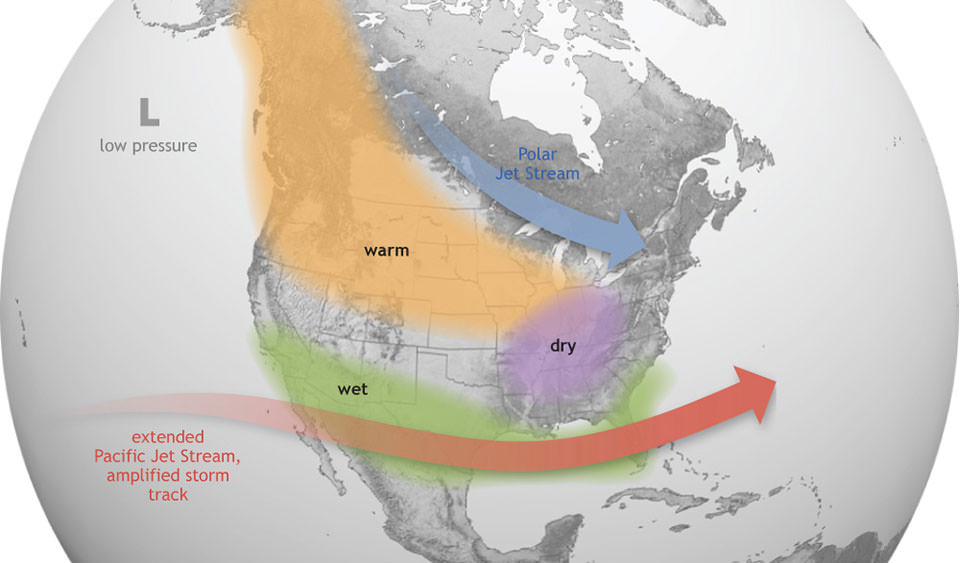
The effects of El Niño and La Niña are not uniform and can vary from region to region. For example, they can affect temperature and precipitation across the United States and other parts of the world. They also influence where and how much it rains in the tropical Pacific.
It’s important to note that these events occur in an irregular pattern every few years and their consequences are complex and far-reaching. They not only affect the weather patterns but also have significant impacts on the ecosystems and economies of many regions around the world.
El Niño and La Niña: The Ocean's Dance and its Global Impact
El Niño and La Niña are not mischievous siblings, but rather the two distinct phases of a larger climate pattern called the El Niño-Southern Oscillation (ENSO). This seesaw between warm and cool phases in the tropical Pacific Ocean has a significant impact on global weather patterns, affecting everything from rainfall and temperature to agricultural yields and natural disasters.
Understanding the Shift:
El Niño: Imagine the central and eastern Pacific Ocean getting unusually warm. This is El Niño, characterized by weakened trade winds and warmer surface waters. This shift disrupts atmospheric circulation, causing changes in rainfall and temperature around the globe.
La Niña: Think of the opposite now. La Niña brings cooler-than-average temperatures to the central and eastern Pacific, due to stronger trade winds pushing warm water westward. This also alters atmospheric circulation, but in a different way compared to El Niño.
Global Impacts:
El Niño and La Niña don't affect the world uniformly. Each region experiences unique impacts based on its location and existing climate patterns. Here's a general overview:
El Niño's effect:
North America: Warmer and drier winters in the south, wetter and cooler winters in the north. Increased risk of wildfires in California.
South America: Heavier rainfall and flooding in western coastal regions, drought in the Amazon and northeastern parts.
Australia: Drier conditions over eastern and southern regions, increased risk of heatwaves.
East Africa: Increased rainfall and flooding.
Southeast Asia: Drier conditions and reduced agricultural yields.
La Niña's effect:
North America: Cooler and wetter winters in the south, warmer and drier winters in the north.
South America: Drier conditions in western coastal regions, above-average rainfall in the Amazon and northeastern parts.
Australia: Wetter conditions over eastern and southern regions, reduced risk of heatwaves.
East Africa: Drier conditions, reduced agricultural yields.
Southeast Asia: Increased rainfall and flooding.
Remember: These are general trends, and the specific impacts can vary depending on the intensity and duration of each El Niño or La Niña event. Additionally, other climate factors like the Indian Ocean Dipole (IOD) can interact with ENSO, further influencing regional weather patterns.
Beyond the Impacts:
The influence of El Niño and La Niña extends beyond immediate weather patterns. They can impact:
Agriculture: Reduced crop yields due to droughts or floods, affecting food security in vulnerable regions.
Natural disasters: Increased occurrence of floods, droughts, heatwaves, and wildfires, leading to economic losses and human displacement.
Ecosystems: Disruption of marine ecosystems and fisheries due to changes in ocean temperatures and currents.
Looking Ahead:
As of today, February 10, 2024, El Niño is weakening with a transition to neutral conditions expected by April-June 2024. However, the chances of La Niña developing later in the year have increased to 55%. Staying informed about these shifts and their potential impacts is crucial for preparedness and risk management.
For further reading: Refer to the following articles if you would like to know more about El Niño and La Niña
This is just a brief overview. If you'd like to delve deeper, here are some helpful resources:
National Oceanic and Atmospheric Administration (NOAA): https://www.noaa.gov/education/resou...sphere/el-nino
Bureau of Meteorology (Australia): https://oceanservice.noaa.gov/facts/ninonina.html
Climate.gov: https://oceanservice.noaa.gov/facts/ninonina.html
During an El Niño event, sea surface temperatures in the tropical eastern Pacific rise to at least 0.5C above the long-term average. The normal east-to-west winds weaken or reverse, sending warm surface waters eastwards1. This leads to warmer and wetter air as more heat is released into the atmosphere1. Global temperatures typically increase during an El Niño episode.
On the other hand, during La Niña periods, the normal east-to-west winds become stronger, pushing warmer waters further west. This causes cold water to rise up from the depths of the ocean, meaning sea surface temperatures are cooler than usual in the east Pacific. Global temperatures typically fall during a La Niña episode.
These changes in sea surface temperatures and atmospheric conditions can lead to significant changes in rainfall and temperature across the globe. They can cause wildfires, droughts, widespread flooding, and even outbreaks of disease.
The effects of El Niño and La Niña are not uniform and can vary from region to region. For example, they can affect temperature and precipitation across the United States and other parts of the world. They also influence where and how much it rains in the tropical Pacific.
It’s important to note that these events occur in an irregular pattern every few years and their consequences are complex and far-reaching. They not only affect the weather patterns but also have significant impacts on the ecosystems and economies of many regions around the world.
El Niño and La Niña: The Ocean's Dance and its Global Impact
El Niño and La Niña are not mischievous siblings, but rather the two distinct phases of a larger climate pattern called the El Niño-Southern Oscillation (ENSO). This seesaw between warm and cool phases in the tropical Pacific Ocean has a significant impact on global weather patterns, affecting everything from rainfall and temperature to agricultural yields and natural disasters.
Understanding the Shift:
El Niño: Imagine the central and eastern Pacific Ocean getting unusually warm. This is El Niño, characterized by weakened trade winds and warmer surface waters. This shift disrupts atmospheric circulation, causing changes in rainfall and temperature around the globe.
La Niña: Think of the opposite now. La Niña brings cooler-than-average temperatures to the central and eastern Pacific, due to stronger trade winds pushing warm water westward. This also alters atmospheric circulation, but in a different way compared to El Niño.
Global Impacts:
El Niño and La Niña don't affect the world uniformly. Each region experiences unique impacts based on its location and existing climate patterns. Here's a general overview:
El Niño's effect:
North America: Warmer and drier winters in the south, wetter and cooler winters in the north. Increased risk of wildfires in California.
South America: Heavier rainfall and flooding in western coastal regions, drought in the Amazon and northeastern parts.
Australia: Drier conditions over eastern and southern regions, increased risk of heatwaves.
East Africa: Increased rainfall and flooding.
Southeast Asia: Drier conditions and reduced agricultural yields.
La Niña's effect:
North America: Cooler and wetter winters in the south, warmer and drier winters in the north.
South America: Drier conditions in western coastal regions, above-average rainfall in the Amazon and northeastern parts.
Australia: Wetter conditions over eastern and southern regions, reduced risk of heatwaves.
East Africa: Drier conditions, reduced agricultural yields.
Southeast Asia: Increased rainfall and flooding.
Remember: These are general trends, and the specific impacts can vary depending on the intensity and duration of each El Niño or La Niña event. Additionally, other climate factors like the Indian Ocean Dipole (IOD) can interact with ENSO, further influencing regional weather patterns.
Beyond the Impacts:
The influence of El Niño and La Niña extends beyond immediate weather patterns. They can impact:
Agriculture: Reduced crop yields due to droughts or floods, affecting food security in vulnerable regions.
Natural disasters: Increased occurrence of floods, droughts, heatwaves, and wildfires, leading to economic losses and human displacement.
Ecosystems: Disruption of marine ecosystems and fisheries due to changes in ocean temperatures and currents.
Looking Ahead:
As of today, February 10, 2024, El Niño is weakening with a transition to neutral conditions expected by April-June 2024. However, the chances of La Niña developing later in the year have increased to 55%. Staying informed about these shifts and their potential impacts is crucial for preparedness and risk management.
For further reading: Refer to the following articles if you would like to know more about El Niño and La Niña
This is just a brief overview. If you'd like to delve deeper, here are some helpful resources:
National Oceanic and Atmospheric Administration (NOAA): https://www.noaa.gov/education/resou...sphere/el-nino
Bureau of Meteorology (Australia): https://oceanservice.noaa.gov/facts/ninonina.html
Climate.gov: https://oceanservice.noaa.gov/facts/ninonina.html